
🔬 ScienceGrades 7 – 8 6 min read
Facts last verified Sep 24, 2026· re-verification due — Checked 62 days ago — due for re-verification.
Drought Deepens as Major US Reservoirs Hit Record Lows
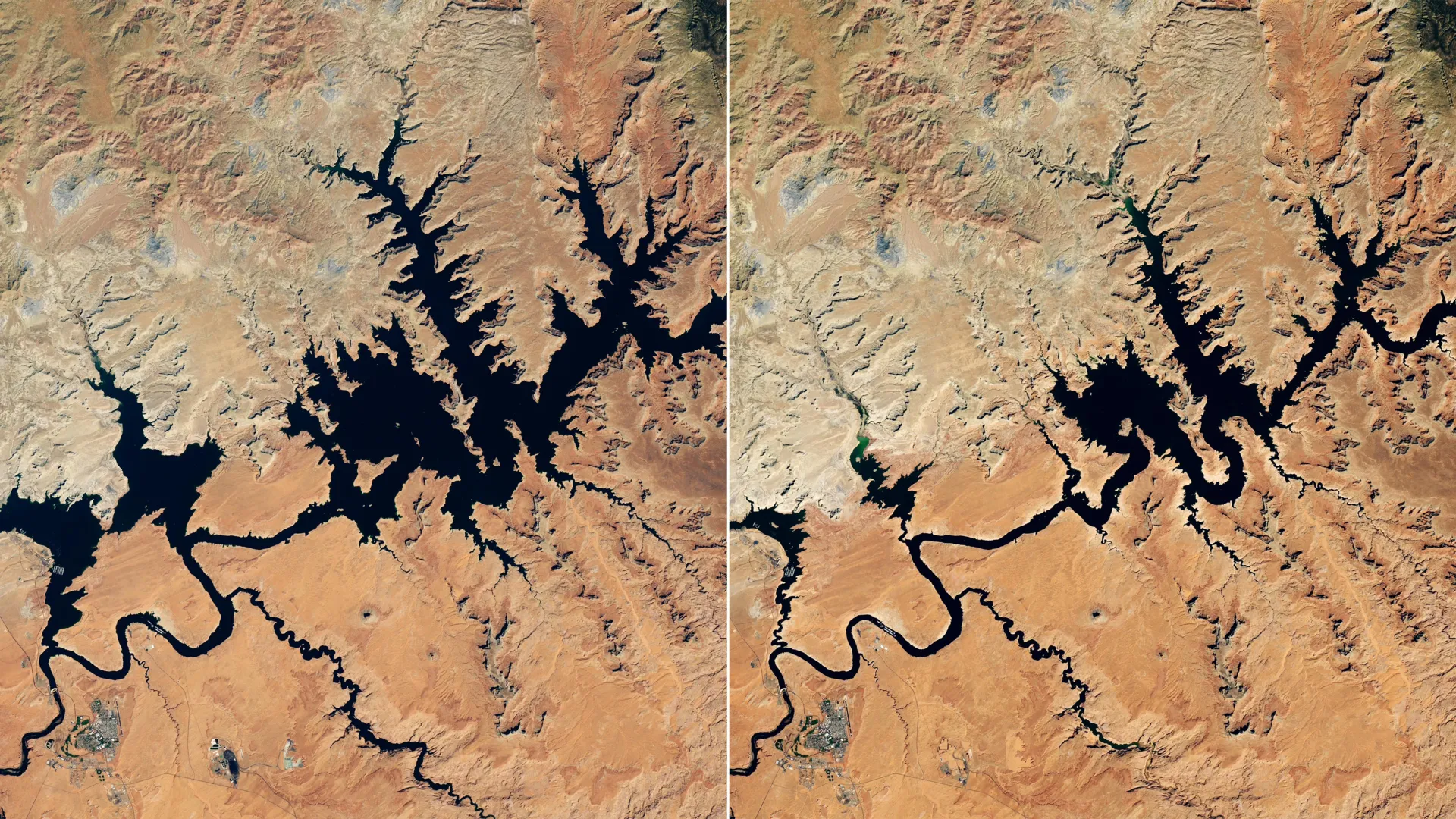
Lake Powell, one of the United States' largest reservoirs, has reached its lowest recorded level, alongside Lake Mead, due to a prolonged dry period, raising significant concerns about water and power resources for over 40 million people in the Colorado River Basin.
The Colorado River Basin, a critical water source for much of the American Southwest, is currently facing unprecedented challenges. Lake Powell, the nation's second-largest reservoir, has recently plummeted to its lowest water level ever recorded. This alarming benchmark follows an exceptionally dry and warm winter that significantly reduced the mountain snowpack, a primary input for the Colorado River system. Alongside Lake Powell, its downstream counterpart, Lake Mead, has also reached historic lows, underscoring a regional water crisis.
These vast reservoirs are not merely scenic attractions; they are integral components of the infrastructure that supports over 40 million people across seven U.S. states and parts of Mexico. They provide municipal drinking water, irrigation for agricultural lands, and generate hydroelectric power, which is a major source of renewable energy for the region. The declining water levels directly threaten these essential services, prompting difficult decisions regarding water allocation and usage.
The reduced water flow is a complex issue driven by several factors, including long-term drought conditions exacerbated by rising temperatures. Warmer air increases evaporation from the reservoirs and causes snow to melt earlier in the season, reducing the overall volume of water available to flow into the lakes. This imbalance between water supply and demand, intensified by climate patterns, puts immense pressure on water managers and policymakers.
In response to this critical situation, federal officials have implemented emergency measures. These include strategically releasing water from other upstream reservoirs into Lake Powell to help stabilize its level. Additionally, efforts are underway to reduce the amount of water released downstream from the reservoir, aiming to conserve existing supplies. While these interventions offer temporary relief, the long-term sustainability of the Colorado River system will require sustained conservation efforts, innovative water management strategies, and potentially significant policy adjustments to adapt to a drier future.
Source: Science Daily · view original
📚 Create a free account to track your child's reading.