
🌍 WorldGrades 7 – 8 6 min read
Facts last verified Jun 24, 2026· re-verification due — Checked 154 days ago — due for re-verification.
Washington's Yorktown Surrender Letter Exhibit in London
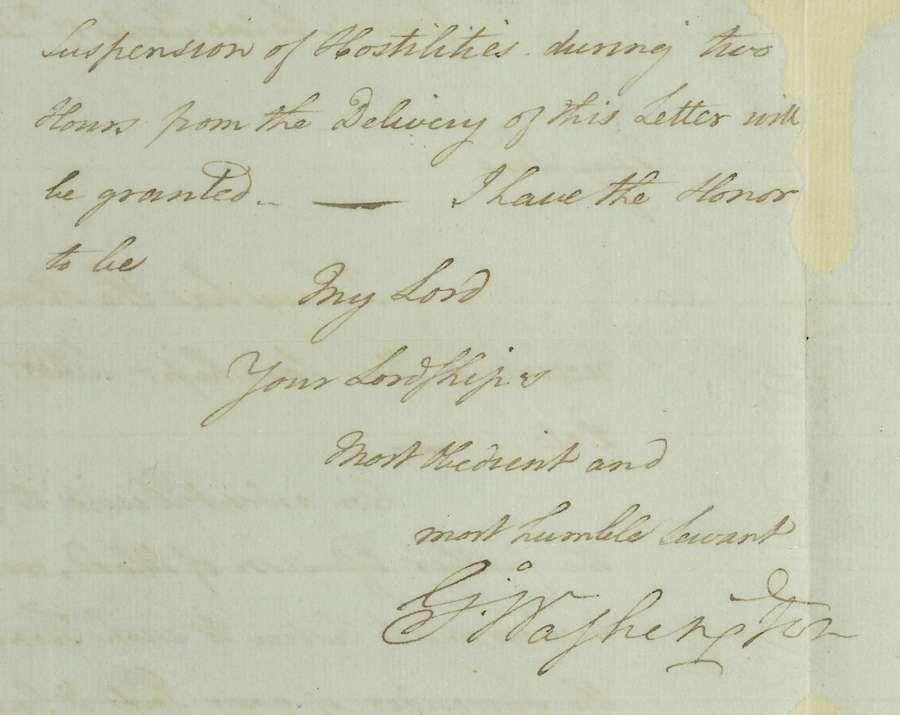
A pivotal letter dictated and signed by George Washington in 1781, formally accepting the British surrender at Yorktown and signaling a desire for peace, is now on public display in London.
A significant piece of American history has crossed the Atlantic to be displayed in London: a letter signed by George Washington himself. This document holds immense historical importance as it formally accepted the British surrender at Yorktown in October 1781, a turning point in the American Revolutionary War and a key step toward American independence.
The letter reveals Washington's leadership and character. In it, he expressed his "ardent desire to spare the further effusion of blood." This phrase highlights his commitment to ending the conflict and preventing more casualties, even in a moment of victory. His words were not just about winning a battle, but about achieving a lasting peace.
The Battle of Yorktown was a decisive victory for the American and French forces against the British. The surrender of General Cornwallis's army effectively ended major fighting in the war. Washington's letter served as the official acknowledgement of this moment, paving the way for peace negotiations and the eventual Treaty of Paris in 1783, which formally recognized the United States as an independent nation.
Seeing this letter on display offers a tangible connection to the past. It allows visitors to imagine the gravity of the moment and understand the profound impact this single document had on the shaping of a new nation. For students of history, it provides a unique opportunity to see an original source from one of America's Founding Fathers, underscoring the values and aspirations that led to the birth of the United States.
Source: Smithsonian · view original
📚 Create a free account to track your child's reading.