
🔬 ScienceGrades 9 – 12 8 min read
Facts last verified Jul 3, 2026· re-verification due — Checked 145 days ago — due for re-verification.
A.I. Alexander Hamilton Debuts at Revitalized Museum of American Finance in Boston
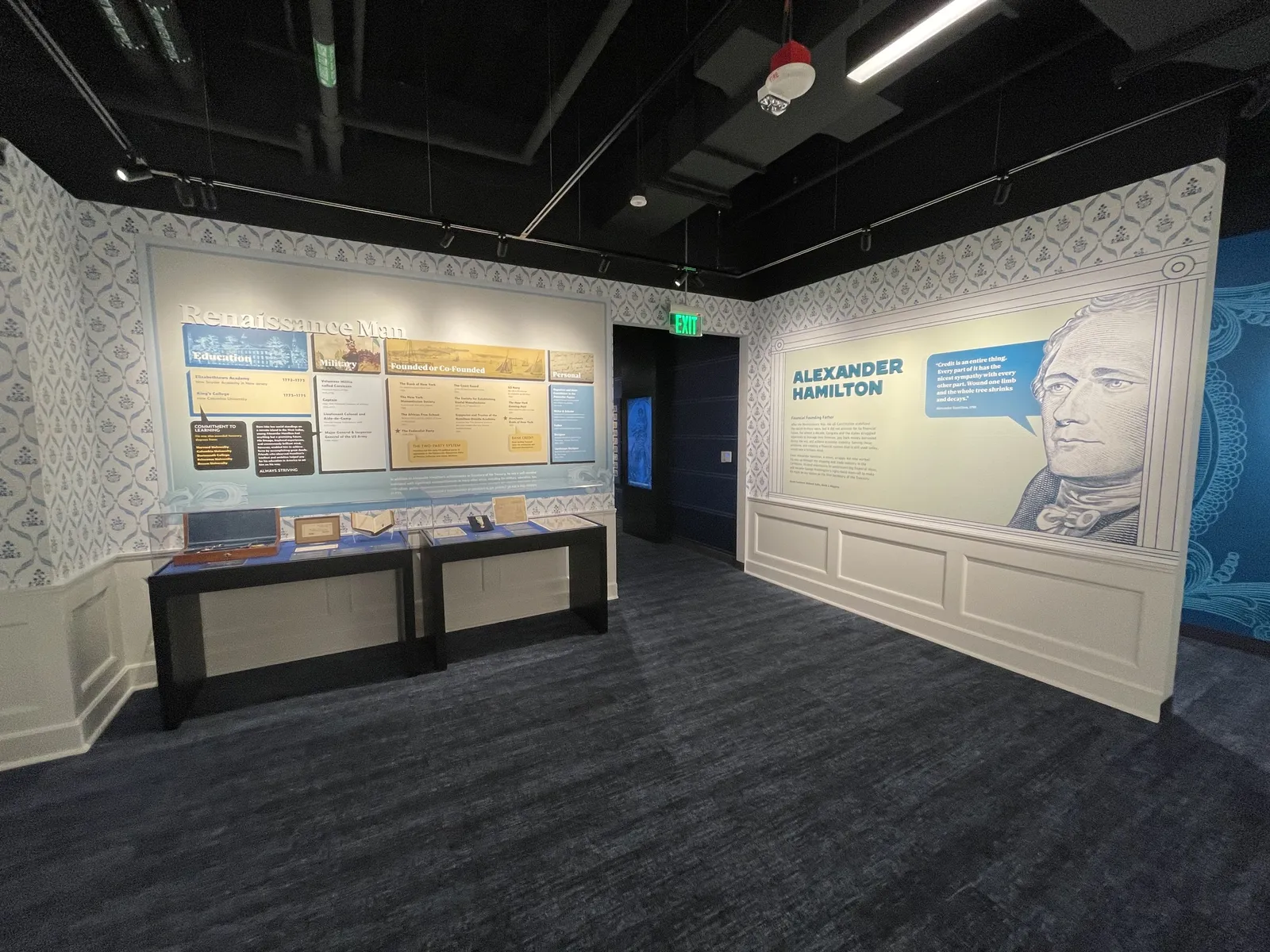
The Museum of American Finance, in its new Boston location, is launching an innovative exhibit featuring an A.I.-generated Alexander Hamilton designed to engage visitors in conversations about historical economics.
The Museum of American Finance, a significant cultural institution focused on the history and impact of U.S. financial systems, is making a notable comeback in a new location in Boston. After several years without a permanent exhibition space since its New York City days, the museum is set to offer visitors an engaging and technologically advanced educational experience.
The centerpiece of this new venture is an exhibit featuring an A.I.-generated Alexander Hamilton. Hamilton, a towering figure in American history, served as the first Secretary of the Treasury under President George Washington. His visionary policies and proposals, such as the establishment of a national bank, the assumption of state debts, and the creation of a national currency, were fundamental in shaping the economic framework of the nascent United States. His contributions are considered foundational to the nation's financial stability and growth.
This A.I. iteration of Hamilton is not merely a static display; it is designed for interactive conversations. Utilizing sophisticated artificial intelligence, the program allows visitors to pose questions about economics, the early challenges of the American financial system, and Hamilton's specific role in its formation. The A.I. processes these queries and generates historically accurate and contextually relevant responses, providing a dynamic learning environment that transcends traditional museum formats.
The integration of A.I. into historical interpretation marks a growing trend in museums and educational institutions. It offers a unique opportunity to bridge the gap between historical figures and contemporary audiences, making historical economic principles — which can often seem abstract — more relatable and comprehensible. For students and adults alike, engaging directly with a simulated historical figure can foster a deeper understanding and appreciation for the complex decisions that shaped the nation's financial destiny.
This initiative by the Museum of American Finance underscores how technology can revitalize museum experiences, transforming passive observation into active participation. It not only educates on the intricacies of American finance but also showcases the potential of A.I. in making historical education more immersive, personalized, and broadly accessible.
Source: Smithsonian · view original
📚 Create a free account to track your child's reading.