
🔬 ScienceGrades 7 – 8 6 min read
Facts last verified Jun 25, 2026· re-verification due — Checked 152 days ago — due for re-verification.
Ancient Brain Cells Key to Blocking Distractions
Scientists have identified a small population of neurons in an ancient brain region that functions as a natural 'focus filter,' enabling the brain to ignore distractions and zero in on essential information.
Our brains are constantly bombarded with sensory information—sights, sounds, smells, and sensations. Yet, somehow, we manage to filter out most of this noise to concentrate on a specific task, such as reading a book or listening to a conversation. Scientists have recently made a groundbreaking discovery clarifying how this remarkable ability to focus is achieved.
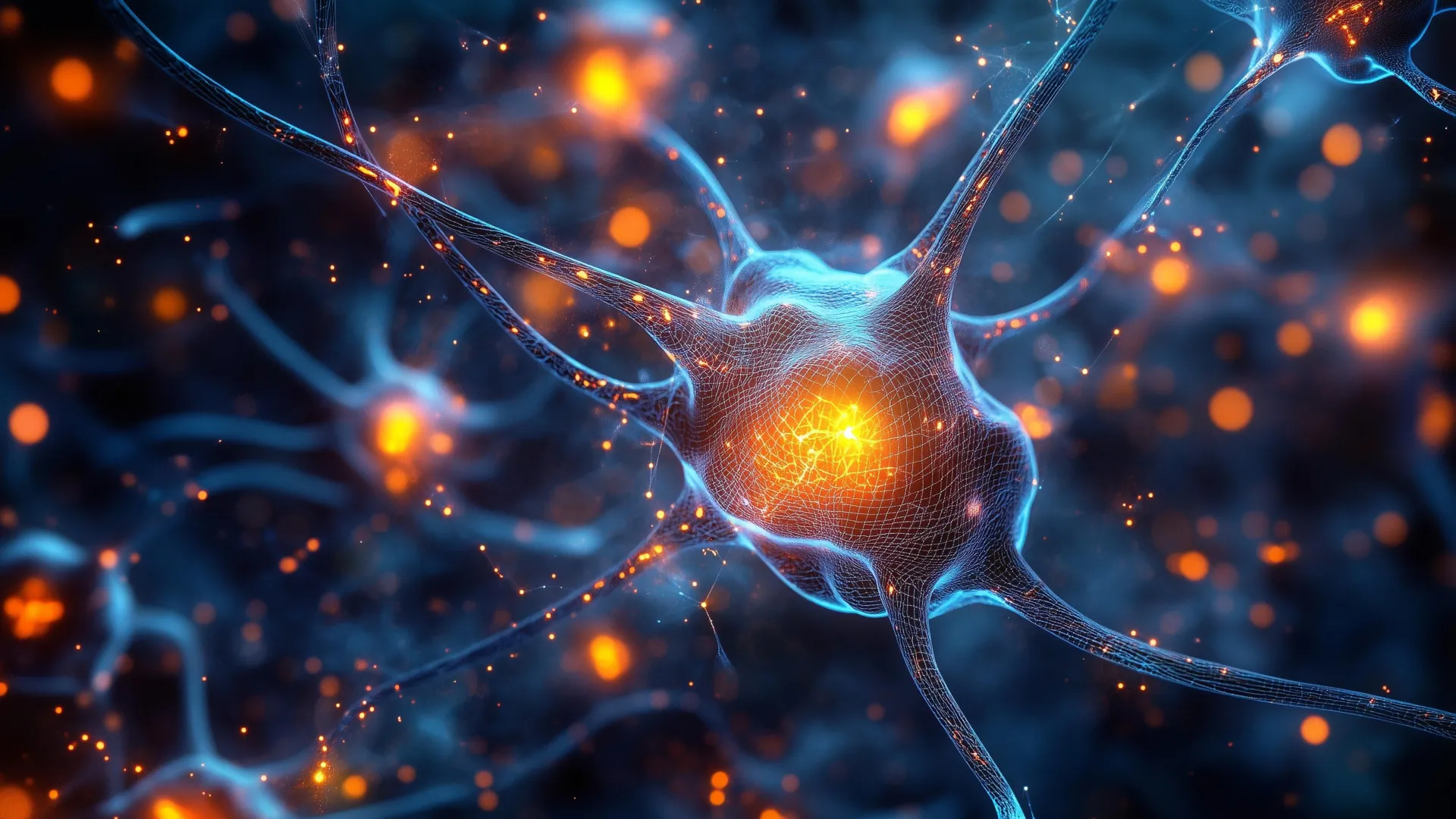
Researchers have identified a tiny, yet powerful, group of neurons located within an ancient part of the brain called the pallidum. This region is very old in evolutionary terms, suggesting its functions are fundamental to survival and complex thought. These specific neurons act as a built-in 'focus filter,' actively helping the brain to ignore irrelevant stimuli and instead hone in on what is most important at any given moment.
To test their hypothesis, scientists conducted experiments on mice. They temporarily deactivated these particular neurons. The results were striking: the mice became unusually distractible, struggling to concentrate on tasks and reacting to every minor external cue. This behavior mirrored aspects of attention-deficit/hyperactivity disorder (ADHD), a condition characterized by difficulties with attention and impulse control. However, as soon as the researchers reactivated the neurons, the mice's ability to focus returned to normal promptly.
This finding is significant because it pinpoints a specific neural circuit responsible for selective attention, a crucial cognitive function. Understanding these mechanisms could pave the way for new insights into attention disorders and how the brain processes information in general. It highlights the brain's incredible capacity to manage an overwhelming amount of data, demonstrating a sophisticated system designed to keep us on track and prevent sensory overload.
Source: Science Daily · view original
📚 Create a free account to track your child's reading.